
Car diagnostics: what the Check Engine light means and what to do first
An orange engine icon on the dashboard does not mean your car needs a tow truck. It means the control unit stored a fault code. Here is what to do, step by step — from the first five minutes to a scan at your car.
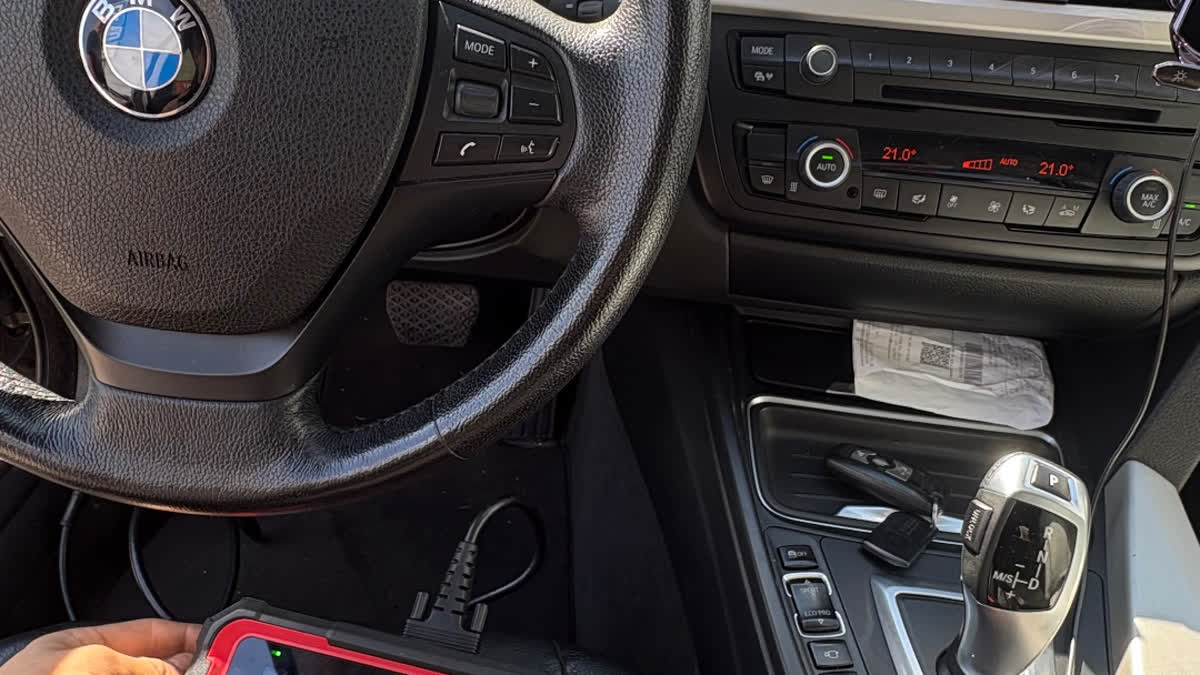
What the Check Engine light actually means
Check Engine is a warning from the engine control unit (ECU). The unit constantly compares sensor readings against the manufacturer's limits. When a reading stays out of range for several cycles, the ECU stores a fault code and turns the light on. The code itself is not a diagnosis — it only tells you which system to look at.
Two states matter. If the light is steady and the car drives normally, you can usually get home or to work and book a scan within a few days. If the light is flashing, the engine stutters, power drops or you hear unusual noises — pull over safely and switch the engine off. A flashing light usually means misfires, which can destroy the catalytic converter within minutes, and that is an expensive part.
The most common fault codes we see in Latvia
The same ten codes come up again and again on our call-outs. These are the ones drivers also see on cheap Bluetooth scanners:
- P0300–P0304 — misfires in one or more cylinders. Usually worn spark plugs or coils, especially past 60,000 km.
- P0171 / P0174 — mixture too lean. Typically an intake air leak, a dirty mass airflow sensor or a cracked vacuum hose.
- P0401 / P0402 — EGR valve issues. On diesels used for short city trips the valve clogs with soot.
- P0420 — catalyst efficiency below threshold. It does not always mean a new catalytic converter; often the lambda sensor is at fault.
- P0135 / P0141 — lambda sensor heater circuit. It shows up first in winter, when the heater works hardest.
- U codes (e.g. U0100) — lost communication between modules. Often a corroded connector or a weak battery.
How a mobile diagnostic session works
The mechanic connects to the OBD-II port (usually under the steering wheel) with a professional multi-brand tool. Unlike a cheap adapter it reads manufacturer-specific codes as well as generic ones, and shows live data: fuel trims, the lambda curve, EGR position, compression balance.
Reading codes is the easy part. The important step is checking on the spot: the code points in a direction, but the cause has to be confirmed physically — inspecting hoses, connectors and plugs, or measuring voltage. Only then does clearing the code and taking a test drive make sense.
The whole session takes 20–40 minutes and costs 30 €. If we carry out the repair straight away, the diagnostic fee is usually included in the total. We always quote the full price before starting and only begin once you approve it.
Can you just clear the code?
You can, but it is like taking the battery out of a smoke alarm. If the cause is still there, the code returns within a few drives. Clearing also resets the readiness monitors, so the car will fail its roadworthiness test for the next few days until several drive cycles complete. If your test is coming up, plan any clearing together with the mechanic.
What to do before the mechanic arrives
- 1Note when the light came on and what you were doing — cold start, hard acceleration, right after refuelling.
- 2Check the oil and coolant levels; a low level alone can trigger fault codes.
- 3Make sure the fuel filler cap is fully tightened (it really does cause EVAP codes).
- 4Photograph the dashboard with the warning lights on and send it to us on WhatsApp — we can often tell how serious it is from the photo.
- 5Clear space around the car and at the driver's seat — the mechanic needs the OBD port and the engine bay.
- 6Have your make, model, year and plate number ready so we can check known issues for that model.
- 7Do not wash the engine or clear codes before the visit — it erases evidence and history.
Example prices
Labour prices are fixed and match our price list. Parts prices are indicative and depend on the model — we confirm the exact amount before starting.
| Diagnostics (OBD-II) | from 30 € |
|---|---|
| Call-out in Riga | from €5 |
| Spark plugs (set) | from €25 |
| Lambda sensor | from €45 |
| SOS roadside call-out | from 30 € |
Need diagnostics today?
We come to you in Riga, the greater Riga area and across Latvia — at home, at work or on the road. Send your car model and a photo of the dashboard and we will tell you how urgent it is.
More articles
Related services
Our most requested mobile jobs — done at your home, workplace or on the road.
- Car diagnostics in Riga at your placeMechanic comes to you · from €30
- Mobile oil changeOil and filters on site · from €35
- Oil change at home or officeNo workshop queues · from €35
- Brake pad and disc replacementBrake repair on site · from €35
- Battery replacement and testingNew battery delivered · from €25
- On-site battery replacementCar won't start · from €25
Related locations
Mobile car service in Riga, the greater Riga area and across Latvia — pick your city.
- Mobile car service in RīgaCall-out: from 5 € · 60–90 min
- Mobile car service in JūrmalaCall-out: 10 € · 60–120 min
- Mobile car service in MārupeCall-out: 5 € · 45–90 min
- Mobile car service in ĶekavaCall-out: 10 € · 45–90 min
- Mobile car service in SalaspilsCall-out: 10 € · 45–90 min
- Mobile car service in OgreCall-out: 15 € · 90–150 min